
Water Damage Restoration Indianapolis is a highly specialized service that addresses the complex challenges of water intrusion in homes and businesses. When unforeseen events like heavy rains, burst pipes, or sewage backups occur, professional intervention ensures property drying, structural integrity, and mold prevention. This comprehensive guide examines each stage of the restoration workflow in third-person perspective, blending local climate considerations, industry standards, and advanced equipment. By understanding every critical phase—from initial inspection to final reconstruction—property owners and facility managers can appreciate why timely action and expert techniques matter in safeguarding their investments and indoor air quality.
When is it time to call a water damage restoration expert?
Water Damage Restoration Indianapolis experts recommend immediate action at the first sign of water intrusion or standing moisture. Even minor leaks behind walls or in crawlspaces can escalate quickly under Indianapolis’s humid summer conditions, leading to hidden mold growth and structural weakening. Recognizing the urgency helps prevent costly repairs down the line and reduces health risks associated with prolonged dampness.
Engaging certified professionals within 24 to 48 hours of noticing water stains, musty odors, or warped flooring ensures the onsite team can contain the issue, deploy water extraction tools, and initiate property drying protocols. Waiting longer amplifies the risk of microbial growth and irreversible material damage. In such scenarios, rapid mobilization of air movers, dehumidifiers, and infrared moisture mapping becomes pivotal in restoring a safe, healthy environment.
Understanding the Water Damage Restoration Process

The water damage restoration workflow in Indianapolis typically unfolds through five major stages. Each phase builds upon the previous one, combining technical precision with adherence to IICRC guidelines. From the moment a call is placed to the final inspection, certified technicians guide property owners through a transparent, methodical journey.
Initial Assessment and Inspection
During the initial assessment, certified technicians conduct a thorough walkthrough to evaluate the extent of water spread and categorize the water type—clean water, gray water from appliances, or black water from sewage backups. This classification determines safety protocols and disposal methods. Technicians use moisture meters and hygrometers to measure relative humidity, pinpointing moisture pockets in walls, floors, and ceilings.
The inspection also involves thermal imaging cameras that reveal hidden wet zones behind drywall or under floorboards. Capturing detailed moisture maps enables the team to design a targeted drying plan. Property owners receive a clear report outlining affected areas, recommended mitigation steps, and projected timelines for each stage of the restoration process.
Emergency Mitigation and Containment
Once the assessment is complete, containment measures begin to isolate the damaged zones and prevent cross-contamination. Floor-to-ceiling plastic sheeting and negative air machines establish temporary barriers, directing airflow away from unaffected spaces. Any compromised materials such as soaked carpet padding, wet drywall sections, or swollen baseboards are removed to reduce the load on drying equipment.
At the same time, technicians shut off affected electrical circuits if necessary and board up openings to secure the property. Emergency mitigation focuses on halting further damage while ensuring the site is safe for both workers and occupants. Rapid removal of surface water and debris also limits the spread of contaminants. This critical containment phase sets the foundation for the detailed drying and restoration work that follows.
Indianapolis Water Extraction Techniques
Water extraction is the cornerstone of effective mitigation, eliminating standing water to jumpstart the restoration timeline. High-performance, truck-mounted pumps and portable extractors handle large volumes, drawing water from floors, carpets, and subfloors. Technician crews often utilize weighted extraction tools that press into carpets, expelling trapped moisture deep within fibers and padding.
Subsequent layers of flooring—vinyl, laminate, or hardwood—require specialized attachments on wet vacuums. In severe flooding, floorboards may be lifted or flood cuts performed in drywall to reach concealed areas. The goal is to reduce moisture content below saturation levels before initiating extensive property drying efforts. Efficient water removal accelerates the overall structural restoration and promotes better air quality.
Professional Water Damage Restoration Indianapolis teams deploy advanced equipment for precise water extraction and moisture mapping. Their commitment to best practices ensures a streamlined process from start to finish.
Property Drying and Dehumidification
Following extraction, property drying commences with a coordinated system of air movers, axial fans, and dehumidifiers. Air movers create high-velocity airflow across wet surfaces, facilitating rapid evaporation. Dehumidifiers then capture the released moisture, maintaining optimal relative humidity.
Understanding the differences between dehumidifier types—refrigerant, low-grain refrigerant (LGR), and desiccant—is essential for tailoring the drying strategy to Indianapolis’s seasonal conditions. Refrigerant dehumidifiers excel in warmer months, while desiccants outperform in colder or low-temperature environments. Hygrometers monitor progress, allowing technicians to adjust airflow direction and equipment placement dynamically.
| Dehumidifier Type | Ideal Temperature Range | Moisture Removal Rate (ppd) | Typical Applications |
| Refrigerant | 60°F – 90°F | 70 – 90 | General property drying in summer |
| Low-Grain Refrigerant (LGR) | 40°F – 90°F | 90 – 170 | High humidity scenarios |
| Desiccant | 20°F – 100°F | 95 – 125 | Low-temperature or specialized drying |
Moisture Mapping and Monitoring
Continuous monitoring underpins effective drying, preventing over-drying or missed moisture pockets. Technicians use data logging hygrometers and moisture meters to record temperature and humidity readings every few hours. These metrics feed into moisture maps, illustrating progress in real time.
Infrared cameras play a supplemental role, highlighting stubborn wet spots within walls or ceilings. By comparing sequential images, teams confirm when materials reach equilibrium moisture content. This precision minimizes unnecessary equipment runtime, reduces energy consumption, and shortens project duration.
Water Damage Restoration Indianapolis: Key Equipment and Standards
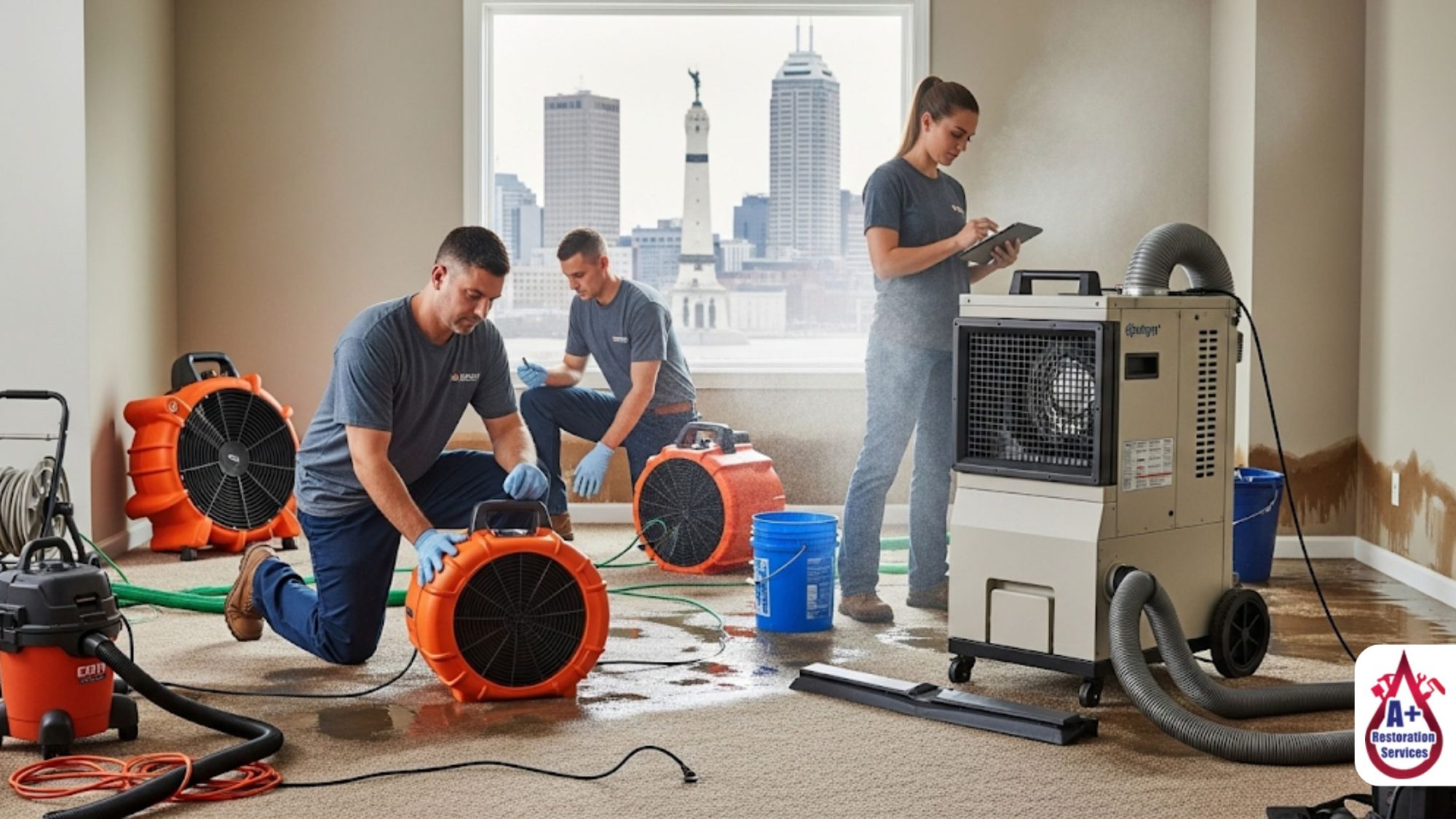
Water Damage Restoration Indianapolis operations adhere to IICRC S500 standards, ensuring consistency and quality across every service call. Certified teams maintain a detailed inventory of industry-leading tools, including truck-mounted extraction units, HEPA-filtered air scrubbers, thermal hygrometers, and commercial dehumidifiers.
Technicians undergo rigorous training to interpret psychrometric charts, calibrate instruments, and implement containment protocols. Use of negative air machines with HEPA filters prevents cross-contamination and protects indoor air quality. Regular equipment maintenance and calibration guarantee accurate performance, safeguarding client properties throughout the process.
Experienced crews also leverage infrared moisture detection, ultrasonic leak detection, and content remediation techniques—such as pack-out, content cleaning, and controlled drying—for salvageable items. This comprehensive toolkit allows teams to design custom restoration plans that align with local building codes and insurance carrier requirements.
Advanced Structural Restoration and Reconstruction
After successful drying, the project transitions into the structural restoration and reconstruction phase. This stage focuses on repairing or replacing compromised building components to restore functionality and aesthetics.
Drywall and Structural Repairs
Moisture-damaged drywall often requires precise flood cuts or full removal, especially when mold colonization has begun. Technicians use moisture meters to define cut lines and prevent unnecessary demolition. Once removed, new gypsum board is installed, taped, and finished to match adjacent surfaces.
Load-bearing elements such as studs, joists, and beams may require structural reinforcement if water exposure compromises their integrity. Licensed contractors evaluate wood warping, fungal decay, and corrosion on metal connectors. Engineering-grade adhesives and hangers restore static load capacities, ensuring long-term stability.
Flooring and Subfloor Restoration
Water-affected flooring demands individualized solutions based on material type. Hardwood planks might be lifted, dried, and reinstalled using commercial-grade floor dryers and dehumidifiers to prevent cupping and buckling. In severe cases, select boards are replaced and refinished to achieve seamless color matching.
Carpeted areas often undergo pad removal, hot water extraction cleaning, and rapid drying. Salvageable carpets are treated with antimicrobial agents and repositioned once moisture levels normalize. For tile or stone, grout lines are pressure-cleaned, and substrates are inspected for water entrapment before grout replacement.
Mold Prevention and Sanitization
To address lingering microbial threats, technicians apply EPA-registered biocides and antimicrobial fogging throughout affected areas. Surface and air samples may be tested to verify mold spore counts before and after treatment. HEPA air scrubbers with negative air pressure create a controlled environment, capturing airborne particles and ensuring thorough sanitization.
Antimicrobial coatings on structural elements provide ongoing resistance to mold, mildew, and bacteria. Content restoration specialists handle pack-out and pack-back services, cleaning salvageable furnishings in climate-controlled facilities. This content-focused approach reduces structural load and allows concurrent rebuild work.
Professional Contact us to arrange a comprehensive property inspection and discover how advanced restoration methods preserve both structures and indoor environments.
Navigating Insurance Claims and Documentation
A seamless restoration experience includes guiding clients through insurance protocols. Technicians meticulously document every phase with timestamped photos, moisture readings, and equipment logs. Detailed reports align with carrier guidelines, expediting claim approvals and disbursements.
Adjusters rely on clear scopes of work, cost estimates, and standardized IICRC references. Restoration companies often liaise directly with insurance representatives, clarifying technical jargon and ensuring coverage for water extraction, demucking of black water, microbial remediation, and reconstruction. Transparent communication keeps property owners informed and reduces administrative stress during a challenging time.
Preventative Measures to Minimize Future Water Damage
After restoration, proactive strategies help prevent recurrent incidents. Proper gutter maintenance, foundation grading, and sump pump inspections address common water entry points around Indianapolis properties. Installing flood vents or backflow valves can protect basements from flash flooding and sewage backups.
Routine HVAC maintenance, including condensate line cleaning, avoids water spillage in mechanical rooms. Humidity control systems with integrated sensors maintain optimal indoor moisture levels year-round. Regular roof inspections, caulking of window seals, and professional waterproofing treatments further strengthen building envelopes against storms and seasonal snowmelt.
Frequently Asked Questions
What should a homeowner look for first after water intrusion?
Property owners should prioritize safety by ensuring electrical circuits are deactivated before entry. Next, they should document visible damage with photos and contact a certified restoration team to prevent mold growth and structural harm.
How long does the water damage restoration process typically take?
The timeline varies with damage severity, property size, and material porosity. Small residential jobs often conclude within three to five days, while extensive structural restoration may span two to three weeks or longer.
Can all water-damaged materials be salvaged?
Salvageability depends on water category, duration of exposure, and material type. Porous materials like insulation and ceiling tiles usually require replacement. Non-porous surfaces and some textiles can undergo professional cleaning and structural drying.
Does homeowner’s insurance cover water damage restoration?
Standard policies typically cover sudden, accidental water events, such as burst pipes or appliance failures. Flood damage from external sources often requires separate flood insurance. Policyholders should review their plans and consult their carrier for specifics.
How can mold be prevented after a restoration project?
Maintaining indoor relative humidity below 50 percent, scheduling routine HVAC and dehumidifier maintenance, and performing periodic moisture inspections help curb mold regrowth. Quick cleanup of spills and leaks also limits microbial proliferation.
Final Words
A well-executed water damage restoration combines technical expertise, certified processes, and state-of-the-art equipment. By following each essential step—assessment, containment, extraction, drying, structural repair, and documentation—property owners in Indianapolis secure both immediate recovery and long-term protection. For tailored solutions backed by local experience and national standards, trust A+ Restoration to safeguard investments, restore comfort, and promote healthy indoor environments.