
Hidden water damage can lurk behind walls, beneath floors, or above ceilings without announcing its presence. Water Damage Restoration Indianapolis professionals stress that early recognition of subtle indicators helps Hoosier homeowners avoid structural deterioration and mold infestations. From faint discoloration on drywall to the soft whisper of dripping behind cabinetry, these telltale marks deserve immediate attention. Recognizing moisture damage assessment cues is the first step toward safeguarding property value and family health. In regions like Indianapolis—where seasonal rainfall and freeze-thaw cycles strain building envelopes—vigilance pays dividends.
What are the common warning signs of hidden water damage in Indianapolis homes?
Water Damage Restoration Indianapolis experts identify a spectrum of clues that reveal concealed leaks and seepage. Unusual staining on walls or ceilings often signals moisture intrusion from above or behind. This discoloration can appear as yellowish patches, brown rings, or even rusty streaks trailing from plumbing lines. In older homes, these marks frequently emerge near fixtures or along drywall seams.
Mold growth and musty odors frequently accompany unseen water damage in damp basements and crawlspaces. Even a light mold blush—tiny black or green specks—hints at persistent moisture. The smell itself, akin to damp earth after rain, can permeate enclosed spaces before visible mold appears.
Occasionally, homeowners notice warped baseboards or flooring cupping in kitchen and bathroom areas. Wood swells when exposed to water, causing planks to lift or buckle. Sagging ceilings or bulging walls may follow if water accumulates above drywall without proper ventilation.
Rising humidity levels indoors—especially when windows and doors are closed—justify further inspection. A sudden jump in relative humidity can indicate active leaks or groundwater seepage. Excess moisture trapped behind insulation can accelerate corrosion of metal studs and fasteners.
The table showcases common warning signs alongside typical causes and recommended actions.
| Warning Sign | Typical Cause | Recommended Action |
| Wall/Ceiling Discoloration | Roof leaks, plumbing drips | Schedule infrared scan and moisture meter test |
| Musty Odors & Mold Blush | Condensation, hidden leaks | Engage mold remediation and dehumidification |
| Warped Flooring | Subfloor moisture, burst pipes | Perform moisture damage assessment immediately |
| Sagging or Bulging Drywall | Prolonged exposure behind drywall panels | Call structural inspection specialist |
How does moisture damage assessment prevent extensive repairs?
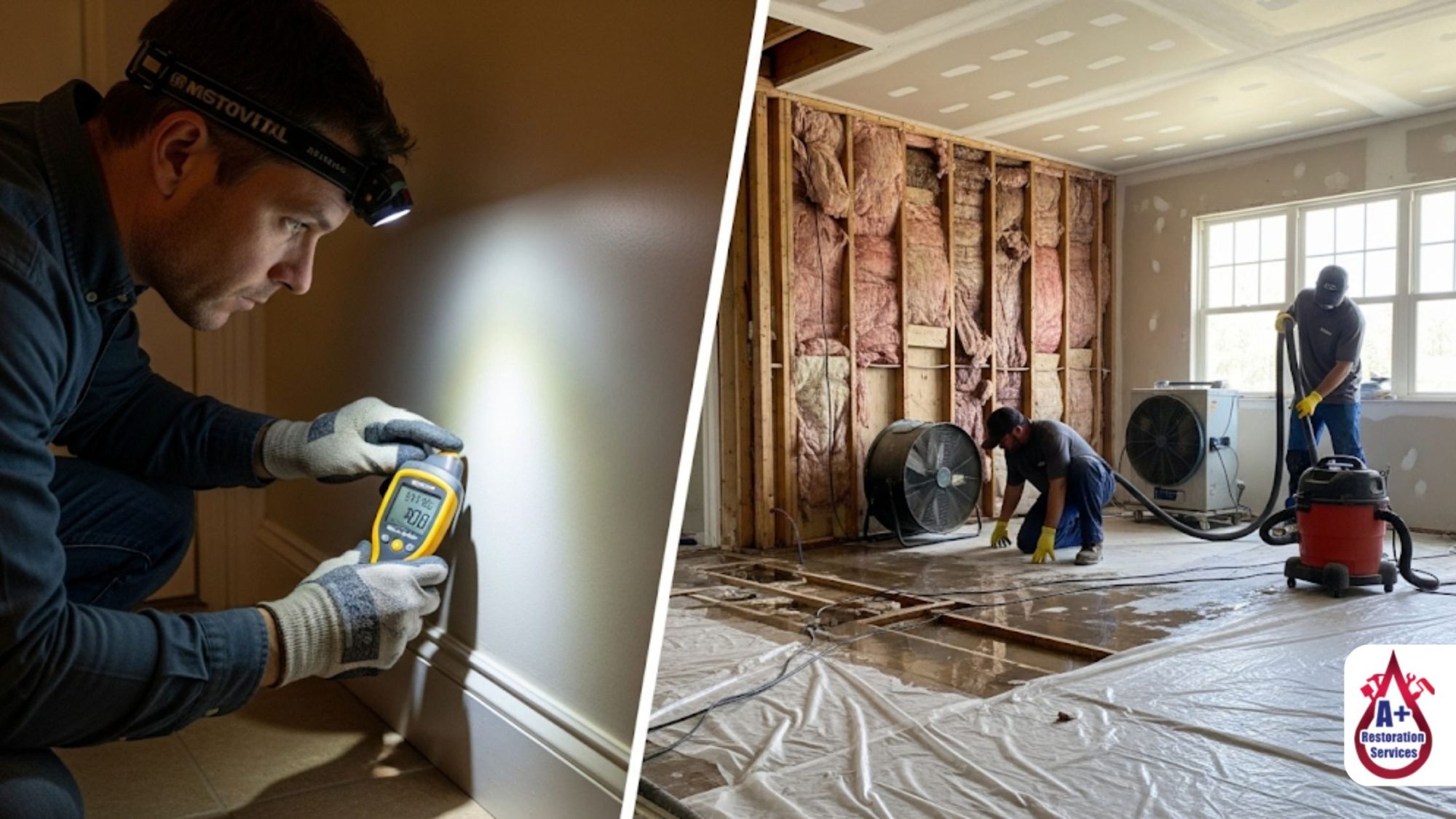
A thorough moisture damage assessment uncovers hidden threats before they escalate into costly structural failures. Certified technicians often employ infrared thermography to detect temperature variances within walls and floors. Cooler spots can betray water accumulation long before visual signs appear.
Moisture meters, both pin-type and non-invasive, quantify water content in wood studs, drywall, and concrete. Regular sweeps of susceptible zones—behind kitchen cabinets, around sump pumps, near foundation cracks—provide clear baseline readings. Deviations from normal moisture percentages trigger deeper investigation.
Visual inspections complement technological tools. Experienced assessors examine mortar joints, sealant beads around doors and windows, and the integrity of flashing on roofing elements. Clogged gutters and downspouts often divert water toward the foundation, so exterior checks remain essential.
Local specialists at Water Damage Restoration Indianapolis deploy a blend of advanced diagnostic equipment and manual techniques. This integrated approach ensures that no moisture pocket escapes detection. Early intervention prevents mold colonization, wood rot, and potential health hazards, preserving both asset value and indoor air quality.
Where do Indianapolis home leaks often originate?
Indianapolis home leaks can stem from a variety of concealed sources, each with distinct risk factors. Aging plumbing lines—copper pipes succumbing to pinhole corrosion or cracked PVC joints—rank high among interior culprits. These slow drips may go unnoticed until water stains emerge weeks later.
Roof valleys and flashing around dormers or chimneys demand seasonal scrutiny. Indiana’s blend of rain, sleet, and snow can loosen shingles or degrade metal flashing. As water infiltrates under roofing layers, it seeps into attic insulation and eventually into living spaces below.
Foundation cracks, exacerbated by freeze-thaw cycles and soil expansion, grant groundwater direct access to basements. Inadequate drainage or malfunctioning sump pumps allow moisture to pool against foundation walls. Homeowners should monitor low-lying landscape grades and verify that downspouts discharge at least three feet from the structure.
While many tackle superficial fixes, it’s always best to Contact us to arrange a professional evaluation. Specialists use pressure-testing methods on plumbing circuits and dye testing in drain lines to pinpoint even the smallest breach. Resolving these latent leaks early saves significant time and money down the road.
Structural Water Damage: Why Engage Water Damage Restoration Indianapolis

Water intrusion that compromises load-bearing elements demands immediate expert intervention. Water Damage Restoration Indianapolis professionals emphasize that structural water damage transcends surface blemishes. It can weaken floor joists, corrode steel connectors, and warp engineered beams—all jeopardizing home stability.
Signs of deep structural distress include widening foundation cracks, doors and windows misaligning, or unexpected floor settlement. When wood framing absorbs water continuously, it can distort and lose its load-carrying capacity. Similarly, steel beams vulnerable to rust may begin to flake, signaling progressive deterioration.
During high-humidity months, vapor barriers behind exterior walls may fail, leading to condensation that gradually rots framing members. Enlisting specialists ensures a comprehensive evaluation by structural engineers if needed. Remediation often involves selective demolition, drying with high-capacity dehumidifiers, and reinforcement with moisture-resistant materials.
This is why homeowners trust A+ Restoration to deliver comprehensive solutions. Their teams coordinate with structural experts, utilize building-code-compliant repair methods, and document every step for insurance and warranty purposes.
Professional Solutions and Prevention Strategies
Addressing hidden water damage requires a multi-pronged response that combines extraction, drying, and preventative measures. Technicians begin with high-powered water extraction vacuums to remove standing water. Next, industrial-grade dehumidifiers and air movers accelerate drying in enclosed spaces.
Once moisture levels return to acceptable thresholds, repair crews replace saturated insulation, mold-infested drywall, and compromised subflooring. They also apply anti-microbial treatments to inhibit future mold growth. Finally, specialized coatings—such as elastomeric sealants—reinforce vulnerable foundations and masonry joints.
Long-term prevention hinges on proactive maintenance. Regularly clearing gutters, inspecting roof penetrations, and sealing foundation cracks reduce water ingress. Installing proper grading ensures rainwater flows away from the house. In flood-prone zones, sump pump backups and basement encapsulation systems add extra layers of defense.
Homeowners can minimize risk further by controlling indoor humidity levels with HVAC-compatible dehumidifiers. Smart leak detectors, strategically placed near appliances and plumbing fixtures, provide real-time alerts when moisture spikes. Consistent vigilance paired with expert support creates a robust shield against future damage.
Conclusion
Hidden water damage poses significant threats to the integrity, safety, and value of Indianapolis homes. From the first discoloration on drywall to advanced structural distress, early detection and professional intervention remain essential. Homeowners benefit most when they combine routine inspections with advanced moisture damage assessment technologies.
When signs of hidden water damage appear, prompt action ensures repairs remain confined to localized areas rather than extensive renovations. Trust in the expertise of Water Damage Restoration Indianapolis specialists to deliver rapid response, thorough restoration, and preventive planning. With dedicated partners like A+ Restoration at the helm, Hoosiers can rest assured their homes remain dry, secure, and mold-free.
Frequently Asked Questions
What are the first steps upon discovering hidden water damage?
Homeowners should immediately stop the water source if possible—shutting off valves or addressing leaks. Next, document the damage with photos and contact a certified restoration service. Rapid moisture reduction using fans and dehumidifiers can limit mold proliferation.
How long does moisture damage assessment take?
A comprehensive assessment typically takes two to four hours, depending on home size and complexity. Technicians use infrared cameras, moisture meters, and visual inspections to map affected areas. The resulting report guides targeted repairs and drying plans.
Can hidden water damage lead to health issues?
Yes. Persistent dampness fosters mold and mildew, which release spores that can trigger respiratory irritation, allergies, and asthma attacks. Early remediation minimizes these risks and restores healthy indoor air quality.
Is homeowner’s insurance likely to cover hidden water damage?
Coverage varies by policy. Sudden and accidental leaks—such as burst pipes—are often covered, while gradual seepage may not be. Detailed documentation and professional reports increase the likelihood of a successful claim.
How often should Indianapolis homeowners inspect for hidden leaks?
At minimum, twice a year—preferably in spring and fall—inspect rooflines, foundation walls, and plumbing connections. After major storms or temperature extremes, a quick check of basements and attics is also wise.